
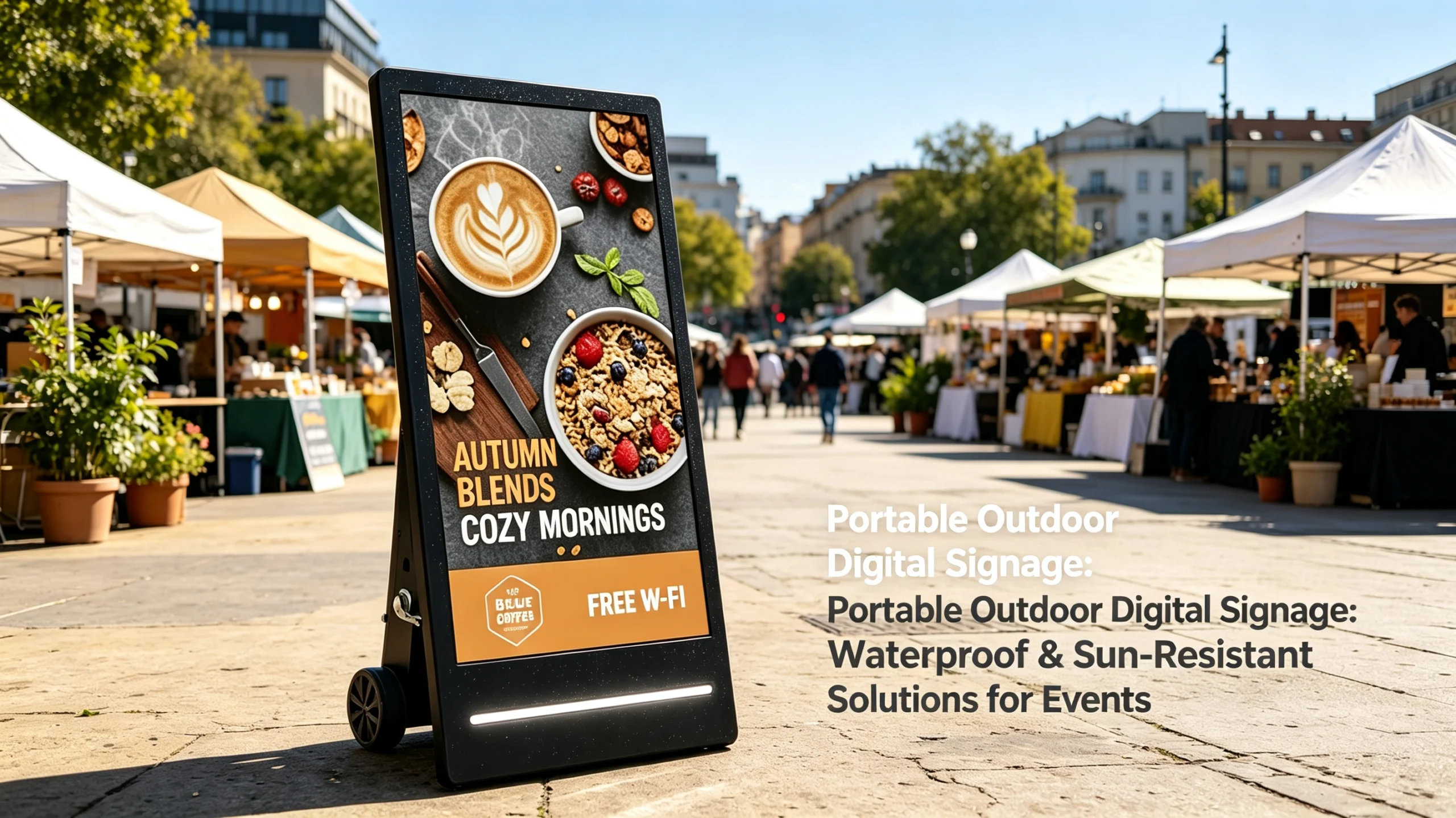
If you’ve ever organized an outdoor event, you know the struggle. The sun is blazing, a sudden rain shower rolls in, and your printed posters are either fading or turning into soggy paper. That’s exactly where portable outdoor digital signage starts to make sense — not as a fancy upgrade, but as a practical tool that keeps your message visible no matter what the weather does.
Why Outdoor Events Need a Different Kind of Screen
Indoor digital signage is relatively easy to work with. You have controlled lighting, stable temperatures, and no rain. Outdoors, everything changes. Sunlight washes out standard screens, heat builds up inside the enclosure, and moisture finds its way into anything that isn’t properly sealed.
This is why a regular indoor display often fails outdoors within a few weeks. A proper outdoor unit needs high brightness — usually around 2,500 nits or more — plus an IP-rated enclosure that resists water and dust. Without those two things, you’re just hoping the weather stays on your side.
What to Look for in a Portable Outdoor Display
When you’re comparing options, don’t get lost in spec sheets. Focus on the few things that actually matter for outdoor use:
- Brightness: If you can’t read the screen in direct sunlight, it’s not an outdoor display. Look for high-brightness LCD panels that stay readable even at noon.
- Weather resistance: Check for IP54 or higher ratings. This covers rain, splashes, and dust — the three things that kill outdoor electronics fastest.
- Battery life: True portability means no dependence on a nearby power outlet. Look for models that run 6–10 hours on a single charge, so you can set up anywhere.
- Weight and setup: If it takes two people and a toolkit to move it, it’s not portable. A good unit can be carried and set up by one person in a few minutes.
- Sun and heat handling: Some screens dim or shut down when they get too hot. Look for models with proper thermal management, so they keep running through a long summer day.
Many of these features are built around the same core technology — a durable LCD digital signage panel paired with a protective enclosure and a battery system. When those three parts work together, you get a display that’s genuinely usable outdoors.
Real Scenarios Where This Makes a Difference
Portable outdoor digital signage isn’t just for big budget productions. It shows up in places you might not expect:
Food festivals and farmers markets. Vendors use them as digital menu boards that can be updated on the spot — change prices, highlight sold-out items, or run a lunch special without reprinting anything. A bright screen also pulls people in from a distance, which matters when you’re competing with dozens of other stalls.
Outdoor promotions and product launches. Brands set up near foot traffic, run a looping video, and pack up at the end of the day. No installation, no permits for permanent structures — just a screen on a stand.
Sports events and community gatherings. Scoreboards, schedules, sponsor messages, and announcements can all run on the same unit. If the event moves to a different field or court, the screen moves with it.
Hotel and resort outdoor areas. Poolside menus, event schedules, and welcome messages can be displayed without running cables across walkways or mounting anything permanently.
In each case, the value isn’t just the screen itself. It’s the ability to change content quickly, move the display to where people are, and not worry about weather damage.
Indoor Use Is Still Part of the Picture
A lot of buyers start with outdoor use in mind, then realize the same unit works indoors too. That flexibility is one of the main reasons portable displays have become popular in restaurants, retail stores, and trade show booths.
If you’re using it indoors, you don’t need the same level of weatherproofing, but you do still benefit from the high brightness. Restaurants with large windows, for example, often struggle with glare on standard screens. A high-brightness panel solves that problem without any extra work.
You can browse a range of these displays, including models designed for both indoor and outdoor use, on our product page.
A Few Practical Tips Before You Buy
- Test it in sunlight. If you can’t see it clearly outside, don’t buy it. Ask for a demo or a video showing the screen in direct sun.
- Check the battery spec carefully. “Up to 10 hours” often means 10 hours at low brightness. Ask about real-world runtime at the brightness level you plan to use.
- Think about content rotation. A looping video or a slideshow works better than a static image for drawing attention. Make sure the unit supports the format you want to use.
- Plan for storage and transport. A carrying case or protective cover makes a big difference if you’re moving the screen frequently.
- Ask about the enclosure. A good enclosure is what separates a display that lasts one season from one that lasts several years.
The Bottom Line
Portable outdoor digital signage works best when you stop thinking of it as a piece of technology and start thinking of it as a tool for a specific job — getting your message in front of people, wherever they are, without worrying about the sun or the rain.
If you’re planning an outdoor event, running a market stall, or just need a screen that can move with your business, it’s worth looking at options built for that kind of use. You can start by exploring the range of portable displays that are designed for both outdoor and indoor environments.