
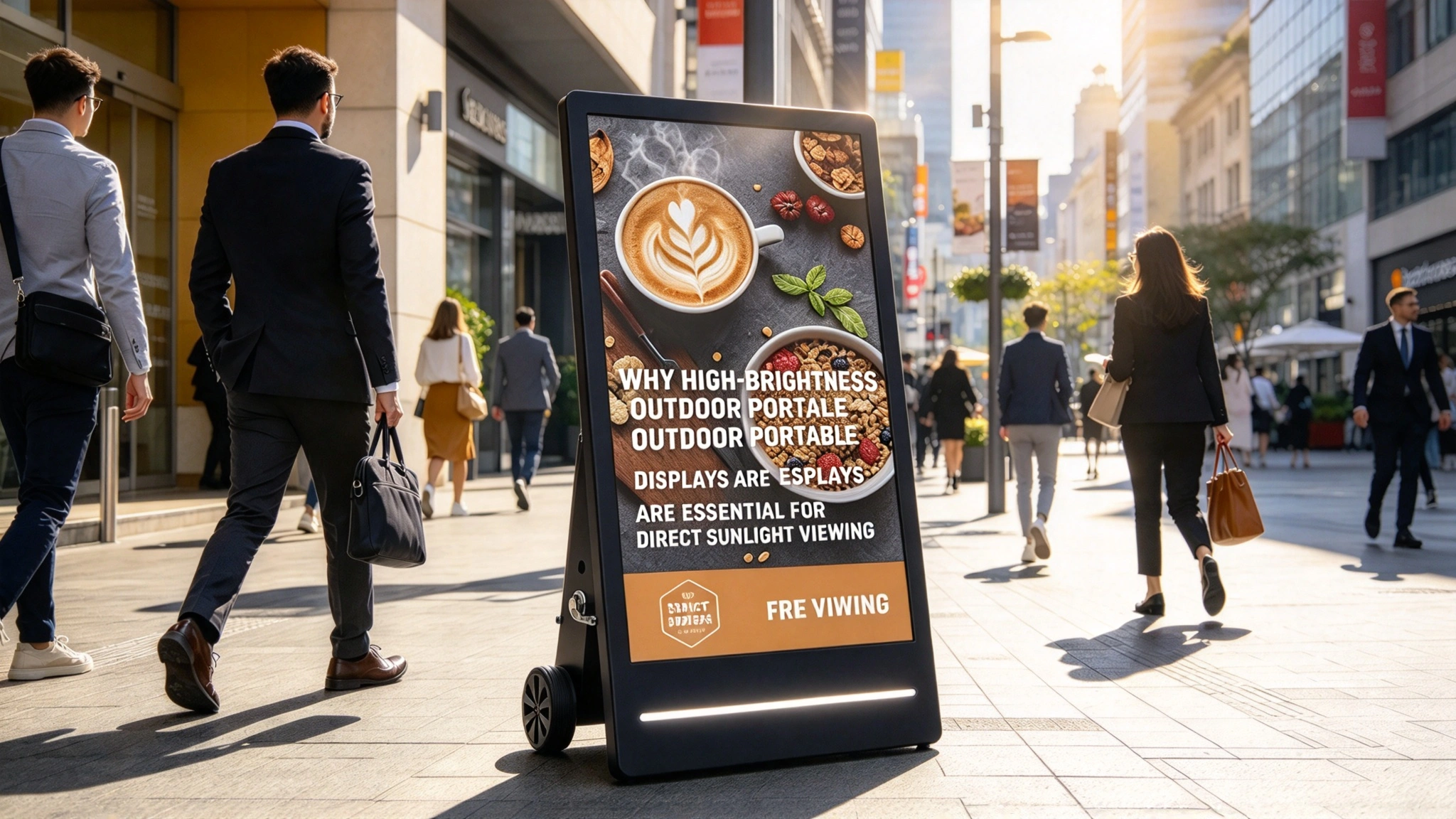
Outdoor digital signage has become a familiar sight in our daily lives. From restaurant menus on sidewalks to digital billboards at bus stops, screens are increasingly moving out of climate-controlled indoor spaces and into the unpredictable outdoors. But anyone who has tried to read a phone or laptop screen in direct sunlight knows the frustration: the image washes out, colors fade, and the content becomes nearly invisible. For businesses relying on outdoor displays to communicate, sell, or inform, this is not just an inconvenience—it is a critical failure.
This is where high-brightness outdoor portable displays come in. Unlike standard monitors, these devices are engineered specifically to remain visible and readable even under the harshest sunlight. In this article, we will explore why brightness matters so much for outdoor viewing, what technical factors define a high-brightness display, and why portable models are becoming the go-to solution for businesses that need flexibility without compromising performance.
The Science of Sunlight and Screen Visibility
To understand why high brightness is essential, we first need to understand the problem. A display works by emitting light. When you view a screen indoors, the ambient light is relatively low, so the screen’s own light output is enough to create a clear image. Outdoors, however, the sun produces an enormous amount of ambient light—often exceeding 100,000 lux on a clear day. This light hits the screen surface and reflects back toward your eyes, effectively “washing out” the image.
The key metric here is luminance, measured in nits (cd/m²). A typical indoor monitor might produce 250 to 350 nits. A standard laptop screen is often around 300 nits. In direct sunlight, these displays become nearly unusable because the reflected sunlight is far brighter than the light emitted by the screen. To overcome this, an outdoor display needs to produce significantly more light—typically 1,000 nits or higher, and often 2,500 to 3,000 nits for truly direct-sunlight readability.
Why High Brightness Is Not Just About “Being Brighter”
It is tempting to think that simply cranking up the brightness on any screen will solve the problem. But high brightness alone is not enough. Several other factors work together to ensure a good outdoor viewing experience:
- Contrast ratio: Even a very bright screen can look flat if the contrast ratio is poor. High-brightness outdoor displays are designed with high contrast so that dark text stands out sharply against a bright background, even when sunlight is hitting the screen.
- Anti-reflective coating: Reflections are the enemy of outdoor readability. A good outdoor display uses anti-glare or anti-reflective surface treatments to minimize the amount of sunlight that bounces back into the viewer’s eyes.
- Color accuracy: Brightness should not come at the cost of color. A high-quality outdoor display maintains accurate colors even at high brightness levels, which is crucial for branding, product images, and visual content.
- Heat management: Producing high brightness generates heat. Outdoor portable displays need efficient cooling systems to prevent overheating, especially when used in direct sun for extended periods.
The Rise of Portable Outdoor Displays
Traditionally, outdoor digital signage meant large, permanently installed screens—think billboards or kiosks. These are effective but expensive, difficult to move, and require significant installation work. Portable outdoor displays offer a different approach: they are lightweight, battery-powered (or easily powered), and can be set up almost anywhere.
This portability opens up new use cases. A restaurant can set up a digital menu board on the sidewalk during lunch hours and move it inside afterward. A retail brand can bring a promotional display to an outdoor event or pop-up market. A sports venue can place screens near concession stands or seating areas. In each case, the display must perform flawlessly in direct sunlight—otherwise, the investment is wasted.
For businesses looking for reliable portable outdoor display solutions, Sundek Display’s portable outdoor display range offers a variety of options designed specifically for high-brightness, sunlight-readable performance. Their lineup includes freestanding models, dual-sided digital menu boards, and waterproof LED screens built for both indoor and outdoor use.
Key Applications Where Sunlight Readability Matters
High-brightness portable displays are not a niche product. They serve a wide range of industries and scenarios:
- Digital restaurant menus: Outdoor menu boards must be readable at a glance, even when the sun is shining directly on them. Customers will not struggle to read a washed-out menu.
- Outdoor retail and pop-up shops: Portable displays allow brands to bring dynamic content to temporary locations, from street fairs to parking lot sales.
- Event signage and wayfinding: At outdoor festivals, conferences, or sports events, clear directional signage is essential. High brightness ensures the message gets through.
- Digital signage for transportation: Bus stops, train platforms, and ride-share pickup points often rely on outdoor screens. Brightness is non-negotiable.
- Industrial and construction sites: Portable displays are used for safety information, schedules, and real-time data—often in full sun.
In all these cases, the common thread is that the display must be visible when and where it is needed, regardless of lighting conditions.
What to Look for in a High-Brightness Outdoor Portable Display
If you are in the market for a portable outdoor display, here are the key specifications to consider:
- Brightness (nits): Aim for at least 1,000 nits for shaded outdoor areas, and 2,500 nits or more for direct sunlight. Do not rely on “peak brightness” marketing numbers—look for sustained brightness.
- Contrast and anti-glare: A high contrast ratio and anti-reflective coating are just as important as raw brightness.
- Battery life: Portability means nothing if the battery dies after an hour. Look for displays that can run for a full day on a single charge, or that support easy battery swapping.
- Durability: Outdoor environments bring heat, dust, and occasional rain. An IP-rated enclosure or at least a ruggedized design is a plus.
- Connectivity: Wi-Fi, Bluetooth, USB, or HDMI inputs allow you to update content easily. Some displays also support remote management.
- Size and weight: True portability means one person can move and set it up without special equipment.
The Bottom Line
Direct sunlight is the ultimate test for any display. Standard screens fail this test, which is why high-brightness outdoor portable displays exist. They combine high luminance, anti-glare technology, and robust design to ensure that content remains clear, colorful, and readable—even when the sun is at its brightest.
For businesses that rely on outdoor communication, whether it is a restaurant menu, a retail promotion, or an event sign, investing in a high-brightness portable display is not a luxury. It is a practical necessity. The alternative—an unreadable screen—defeats the entire purpose of digital signage.
If you are ready to explore portable outdoor display options that are built for sunlight, Sundek Display’s collection is a great place to start. Their products, such as the 43/49/55-inch freestanding outdoor digital signage and the 55-inch dual-sided digital menu board, are designed to meet the demands of direct-sunlight environments.