
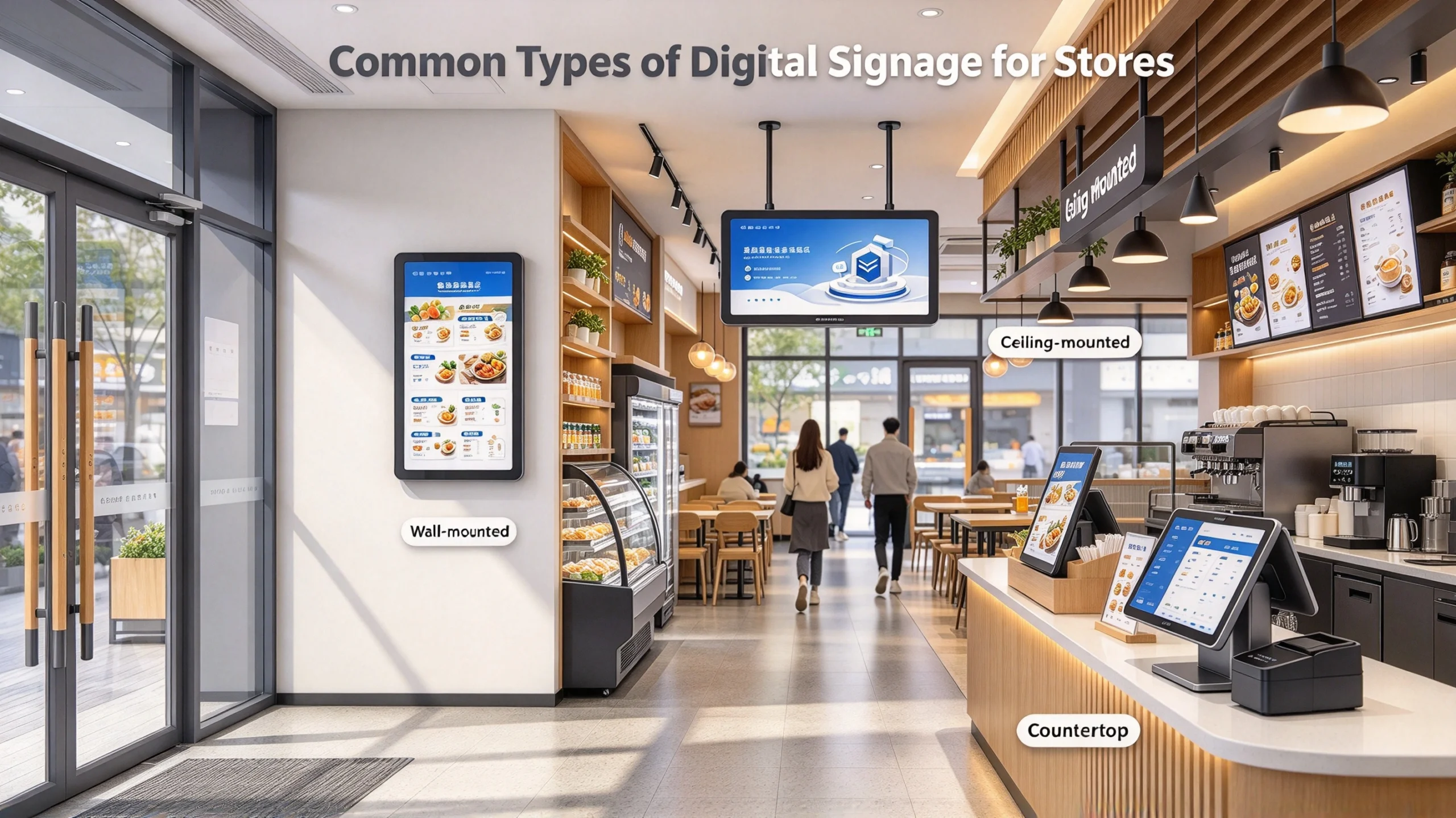
Walk into any busy store today and you will notice one thing: screens. Big ones, small ones, ones that hang from the ceiling, and ones that sit by the door. Retail digital signage has moved from a “nice to have” to a proven revenue driver. Retailers who deploy it strategically report an average 32% increase in sales, while featured products promoted on-screen can move up to 32% more units, according to Nielsen and other industry research. The question is no longer whether screens sell — it is how you use them. This guide breaks down the strategies, content and hardware that turn a screen into your best salesperson.
Why Digital Signage Sells
Digital signage works because it changes attention into action. Static posters wait for a customer to notice them; dynamic screens pull the eye, hold it and nudge a decision. The numbers back this up. Around 80% of shoppers say they have entered a store because of its sign, and up to 76% report being influenced to buy by digital signage. Even a modest setup can lift in-store sales on promoted items by 5–15% and raise impulse purchases at the point of sale by nearly 20%. That is not marketing hype — it is measurable behavior change.
1. Put a Screen Where Foot Traffic Decides
The biggest sales decision happens before a customer steps inside: whether to enter at all. An eye-catching window or entrance display is your strongest foot-traffic weapon. For flexibility, a [portable digital signage] unit on an A-frame or wheeled stand lets you move your message to wherever the flow is — the doorway, the sidewalk, a busy aisle or an event. Move it for a lunch rush, bring it back for an evening promotion. Dynamic content — bright colors, motion, a live countdown — captures 400% more views than static signage and pulls passersby through the door.
2. Use Digital Menu Boards to Raise the Average Ticket
If you run a café, restaurant or any food business, a [digital menu board] is your highest-converting screen. Full-screen photos of your best-selling dishes sell what a price list cannot. Restaurants using digital menu boards typically see a 15–30% increase in average order value, with impulse purchases climbing 18–35% when high-margin items are visually emphasized. Cycle in combo deals, highlight one hero dish, and use daypart-specific content — breakfast items in the morning, drinks at afternoon peak. The same principle applies to retail: use on-screen promotions to steer customers toward higher-margin products and add-ons.
3. Design Content for Urgency and Upsell
Static content goes stale. Digital signage lives or dies by what you schedule. Run limited-time offers to create urgency, rotate bestsellers, and pair each featured item with a clear call to action. In one drive-thru test, showing a high-margin add-on a few cars ahead of the speaker lifted upsell acceptance from 12% to 28%. Apply the same logic in-store: position an upsell prompt next to a fast-moving product and let the screen do the suggestive selling your staff cannot always do consistently.
4. Turn the Checkout into a Sales Point
The point of sale is prime real estate for impulse purchases. A small screen near the register can display last-chance deals, loyalty sign-ups or QR codes for online orders. Interactive displays make this even stronger — surveys show 78% of shoppers say interactive screens make them more likely to spend time in a store, and 62% report making unplanned purchases after engaging with one. Keep content short, obvious and thumb-friendly.
5. Keep It Fresh with Smart Content Management
The real advantage of digital over printed is speed of change. A [digital signage software] system lets you update every screen in minutes from one place — no reprinting, no wasted posters. That means you can test promotions, respond to inventory, and match the weather or time of day in real time. Regular updates also keep customers curious: a screen that changes keeps earning attention, while a static ad blends into the wall.
6. Measure What Moves the Needle
Treat screens like any marketing channel — track and optimize. Compare sales on promoted items against non-promoted ones, watch average basket value, and A/B test different visuals or offers. When one hero image outperforms another, keep it and push it harder. Businesses that monitor and refine their content see the biggest returns; the 15–30% revenue lift reported in the first year is earned by operators who treat signage as an ongoing campaign, not a one-time install.
How to Get Started Without Over-Spending
You do not need a wall of expensive screens. Start with one high-traffic location: the entrance. Choose a [portable digital signage] display you can move and reuse across campaigns, pair it with easy-to-use content software, and fill it with clear, sales-focused visuals. Consumer-grade displays burn out quickly in commercial use; a commercial display lasts three to five years and pays for itself many times over.
Frequently Asked Questions
Does digital signage really increase sales? Yes. Retailers report an average 31.8–32% sales lift after switching to digital, with featured-item sales up to 32% higher and impulse purchases rising by 15–20%.
What content performs best? High-quality product photos, clear prices, limited-time offers and simple calls to action. Motion and color beat static text every time.
Do I need an expensive setup? No. A single commercial display with flexible software is enough to start, and portable units let you test multiple locations with one screen.
Is digital signage worth it for small stores? Absolutely. Small retailers benefit most from low-cost, portable setups that drive foot traffic without a permanent install.
The Bottom Line
Digital signage is not about decorating a store — it is about directing buying decisions. Used well, retail digital signage turns passersby into customers, menus into higher tickets and checkout lines into upsell opportunities. Start with one entrance display, keep your content fresh, and let the data tell you what to push next. For a flexible, budget-friendly starting point, explore [portable digital signage] that you can move anywhere your customers go — and watch your store’s sales follow.https://sundekdisplay.com/product/