
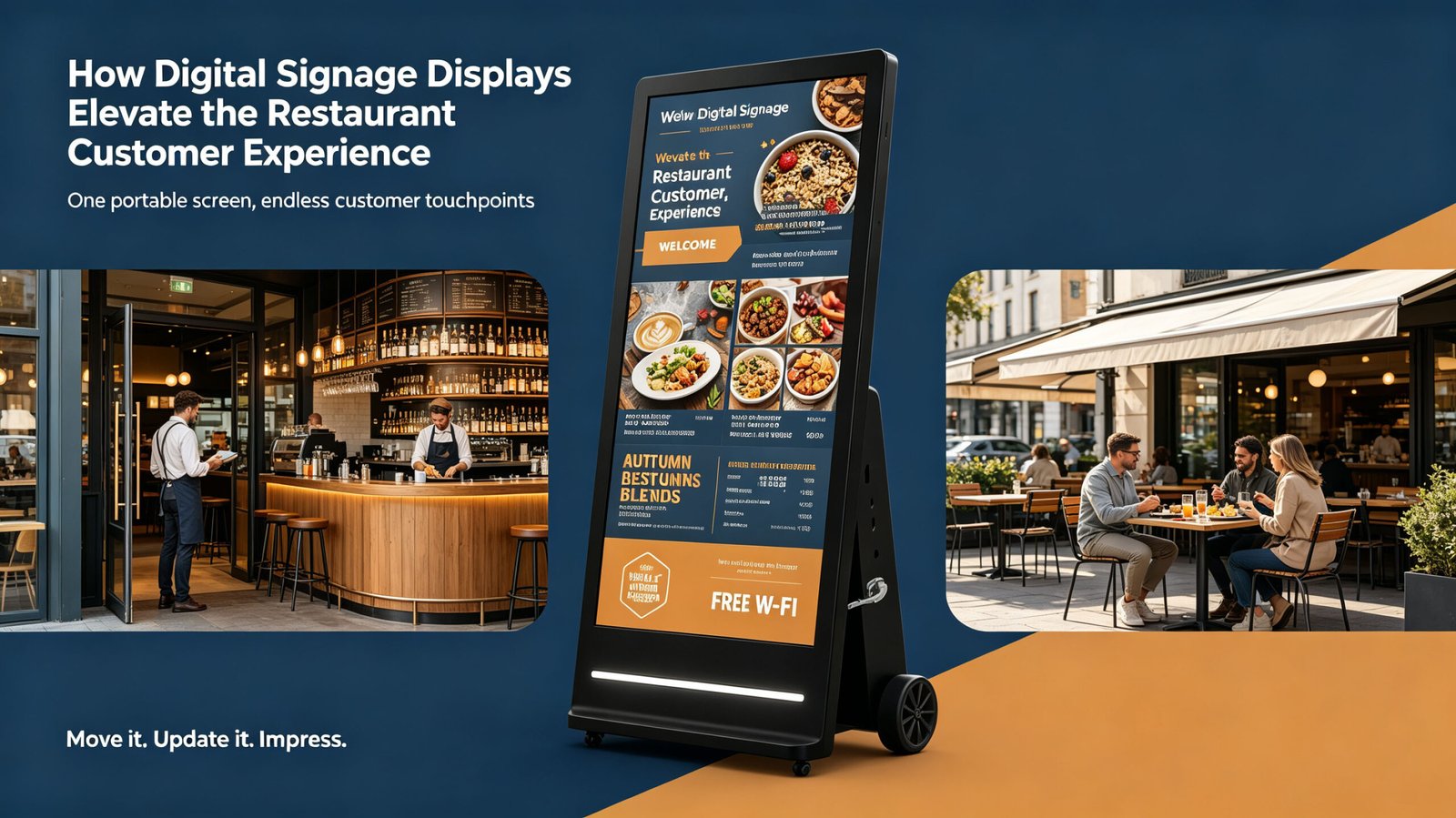
In the bustling foodservice industry, first impressions are formed in seconds, and a diner’s experience goes far beyond just the taste of the food. Today’s tech-savvy consumers expect speed, personalization, and visual engagement. For restaurant owners, digital signage displays have evolved from a “nice-to-have” novelty into a crucial infrastructure for driving sales and enhancing customer satisfaction. By replacing static posters with vibrant, dynamic screens, restaurants can completely transform the customer journey, from the initial sidewalk glance to the final bite.
Capturing Attention and Boosting Revenue from the Start
Before a customer even walks through the door, digital signage can influence their decision. Large-format LED displays or digital menu boards placed in windows or storefronts are far more effective at capturing attention than traditional printed posters. They cut through the visual clutter of busy streets or mall concourses, allowing you to showcase your best dishes with high-resolution visuals that “pop”.
This power to engage directly translates to the bottom line. Studies consistently show that digital menu boards increase sales. In fact, over 80% of restaurant operators have reported an increase in orders after adopting digital signage. The secret lies in their ability to influence behavior. When customers see vibrant, mouth-watering images of a daily special or a new combo meal, they are more likely to purchase it. Research indicates that 68% of customers are more likely to buy an item advertised on a digital screen.
This is where strategic upselling comes into play. By placing targeted promotions for high-margin items like desserts or premium add-ons next to the main menu, restaurants can nudge customers towards more profitable choices. This ability to visually “suggest” makes digital signage a powerful silent salesperson for your business .
Streamlining the Ordering Process and Reducing Wait Times
One of the most significant sources of customer frustration is waiting. Digital signage directly addresses this by streamlining operations. Self-ordering kiosks, which rely heavily on digital menu screens, can significantly improve order speed by allowing customers to browse and customize at their own pace, freeing up staff to focus on food preparation and service.
Furthermore, digital displays can be integrated with your point-of-sale system and queue management solutions. This allows them to provide real-time updates, such as displaying order statuses for customers waiting for takeaways or managing expectations by showing estimated wait times. Being transparent about wait times builds trust and reduces the perception of a long queue, leading to a more relaxed and positive experience.
Modern digital signage also solves the problem of out-of-stock items. A static menu that advertises an unavailable item is a recipe for disappointment. With digital displays, you can instantly remove or grey out items that are no longer available, automating updates to build “trust through honest communication”.
Personalizing the Ambiance and Marketing in Real-Time
Digital signage offers a level of personalization that static signage can never match. This is often referred to as “dayparting”—the ability to automatically change your menu based on the time of day. The same screen can show a hearty breakfast menu in the morning, a quick lunch special at noon, and a premium dinner selection in the evening. This keeps the content relevant and appealing to customers based on when they are visiting.
Innovative restaurants are taking this even further. You can now leverage location-based services, weather data, and even AI to tailor your content. For example, a digital menu board can start promoting cold beverages when the weather is hot or featured hearty soups during a rainstorm. On the operational side, kitchen display screens (KDS) can show live orders and inventory levels, helping kitchen staff work more efficiently and avoid service bottlenecks.
This not only improves the customer experience but also drives operational agility. For example, you can instantly test different promotions across your chain to see what sells best, ensuring consistency across locations while having the flexibility to tailor content to the local clientele. This dynamic marketing capability is something digital signage excels at compared to its static counterparts.
Creating an Immersive and Memorable Brand Experience
In competitive markets, it’s the overall atmosphere that makes customers want to return. Digital signage has become a key element in enhancing that ambiance. Rather than just being functional, these displays can transform a space. For instance, Wendy’s new concept in Australia uses a massive, dynamic LED ceiling that stretches across the entire restaurant, acting as a canvas for animated menu items and creating an immersive visual experience that draws guests in.
These visual elements can also reduce perceived wait times. Data shows that 75% of diners believe their experience is improved when technology like tabletop digital displays or engaging wall screens keeps them entertained while they wait for their food. By turning the queue into an opportunity to showcase your brand story and culinary artistry, you create a more positive and memorable dining experience that encourages return visits and social media buzz.
Conclusion
In conclusion, digital signage is a versatile tool that addresses all critical aspects of the modern restaurant experience. From attracting new customers with stunning visuals and boosting average ticket sizes to streamlining operations and creating a more personalized, memorable atmosphere, the benefits are clear. As technology continues to evolve, integrating a robust digital signage solution is no longer optional but essential for restaurants looking to thrive in the future.
Ready to bring the power of dynamic digital displays to your restaurant? Explore our full range of innovative digital signage solutions at Sundek Display [https://sundekdisplay.com/product/] and discover how we can help elevate your customer experience.