
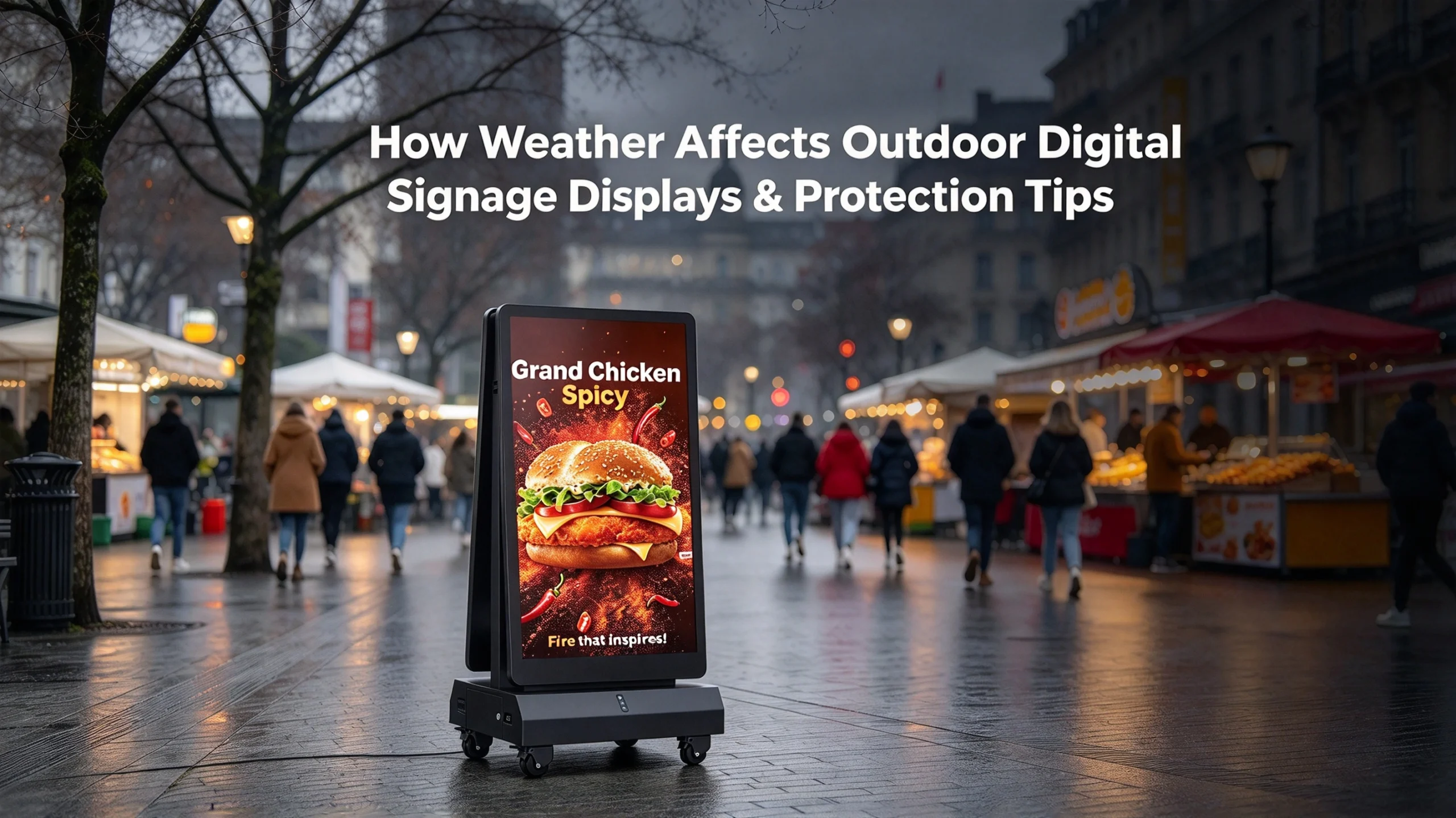
Outdoor digital signage has become one of the most powerful tools for retailers, restaurants, and event organizers to attract customers around the clock. But the moment you move a display outside, you hand it over to an environment it was never built to tolerate. Rain, heat, cold, dust, salt spray, and harsh sunlight can quietly destroy an unprotected outdoor advertising screen within a single season. This guide explains exactly how weather affects outdoor digital signage displays, how to read the key protection ratings, and the practical protection tips you need to keep your investment running for years.
Why Weather Is the Biggest Threat to Outdoor Digital Signage
Most people assume a screen fails because of age. In reality, the number one killer of an outdoor digital signage display is moisture. Water works its way through seams, ports, and poorly sealed edges, then corrodes the internal electronics and causes shorts. Once water gets inside, repair costs often exceed the price of a new unit.
Heat is the second biggest enemy. Outdoor commercial displays generate their own heat, and when ambient temperatures push past 40°C, the combined load degrades the backlight, the power supply, and the LCD panel itself. Brightness fades, colors shift, and the screen eventually burns out. Cold weather brings its own problems, including condensation and sluggish performance at low temperatures.
In short, the weather determines whether your outdoor digital signage lasts three years or ten. Understanding the environment is the first step to buying and protecting the right equipment.
How Each Weather Condition Damages Outdoor Screens
Rain and Moisture Rain is the most obvious threat. If your waterproof outdoor digital signage is not sealed to the correct ingress protection standard, water enters through vents, cable ports, and the bezel. Even high humidity without direct rain can cause condensation on the inside of the glass, which fogs the image and corrodes the circuit board over time.
High Temperatures and Direct Sun Direct sunlight raises the surface temperature of a dark enclosure far above the air temperature. Without proper ventilation or cooling, the display overheats, the image becomes dim, and the backlight lifespan shortens dramatically. This is why brightness matters so much: a high brightness outdoor screen must run at high power, which generates more heat that must be managed.
Freezing and Condensation In cold climates, temperature swings between day and night cause condensation to form on the internal optics. Repeated freeze-thaw cycles can also crack seals and loosen connectors. A commercial outdoor display rated for wide temperature ranges handles these swings without failure.
UV Radiation and Sunlight Bleaching Prolonged UV exposure fades the enclosure, yellows the screen cover, and reduces optical clarity over time. For a display that sits in full sun, UV-resistant materials are not optional.
Wind, Dust, and Salt Spray Coastal locations add salt spray, which accelerates corrosion on metal enclosures and connectors. Wind drives dust into seams, and airborne debris can scratch the front cover. These factors are easy to underestimate but cause steady degradation.
Key Ratings That Decide If a Screen Survives Outside
IP Rating (Ingress Protection) The IP rating tells you how well the enclosure blocks dust and water. The first digit covers solids, the second covers liquids. For outdoor use, IP65 means dust-tight and protected against low-pressure water jets — the minimum you should accept. IP66 and IP67 offer stronger water protection and are safer for rain-heavy or wash-down environments.
Brightness (Nits) Sunlight makes ordinary indoor screens invisible. For a screen facing direct sun, you need a high brightness outdoor display of at least 2,500 nits; shaded or awning-covered positions can work with around 1,500 to 2,000 nits. Lower brightness means the image is washed out in daylight, and users may crank it up, generating extra heat.
Operating Temperature Range A reliable outdoor digital signage display should specify a working range that covers your climate, for example −20°C to +50°C. Units with active cooling or heating options adapt to both extremes and prevent condensation.
Enclosure and Glass Quality Look for anodized or powder-coated aluminum enclosures and tempered glass covers. These materials resist corrosion, UV, and impact, which extends the lifespan of the outdoor LED display weather protection system overall.
Protection Tips to Keep Your Outdoor Digital Signage Running
- Check the IP rating before you buy. Confirm that the enclosure matches your local climate and washing method. When in doubt, choose a higher waterproof outdoor digital signage rating rather than a cheaper, lower-rated unit.
- Provide shade and ventilation. A canopy or awning reduces direct sun load and slows UV and heat damage. Never enclose the unit without leaving room for airflow.
- Position the screen away from sprinklers and standing water. Mounting height and drainage matter. Keep cable entries pointing downward and sealed so rain cannot run into the ports.
- Clean the front cover regularly. Dust and salt residue build up on the glass, dulling the image and trapping heat. Use a soft cloth and a cleaner safe for coated displays; avoid pressure washing the seams.
- Inspect seals and gaskets each season. Check for cracks in the gasket and loose screws around the bezel. A tiny gap is all it takes for moisture to enter an outdoor digital signage display.
- Protect the power supply. Use a surge protector and ensure grounding. Storms and grid fluctuations are a common cause of sudden failure even when the screen itself is weatherproof.
- Choose quality over price. A weatherproof outdoor digital signage display from a reliable outdoor digital signage supplier is a long-term asset. The small upfront saving on a cheap unit is usually lost to repair and replacement within two years.
Best Practices for Long-Term Outdoor Signage Lifespan
The longest-lived installations share a few habits. First, they track the display’s brightness over time so they can detect backlight degradation early. Second, they schedule cleaning around seasons, especially after storms and in coastal or dusty areas. Third, they keep firmware and content systems updated, because overheating can also come from software pushing a static bright image for hours. Finally, they document the environment — temperature, exposure, and weather history — so replacement decisions are based on data, not guesswork.
FAQ: Weather and Outdoor Digital Signage
How long does an outdoor digital signage display last? With the correct IP rating and regular maintenance, a quality commercial outdoor display typically lasts five to seven years. Poor sealing and high heat reduce this to two or three years.
Does rain ruin outdoor digital signage? Only if the unit is not properly rated. A waterproof outdoor digital signage unit with IP65 or higher is designed to withstand rain; an indoor screen placed outside is not.
What brightness do I need for outdoor signage? For direct sun, choose at least 2,500 nits. For shaded or canopied spots, 1,500 to 2,000 nits is usually enough.
Can outdoor signage work in freezing temperatures? Yes, provided the display’s operating range covers your climate and the unit includes condensation protection or heating options for very cold regions.
Is high heat or rain worse for outdoor screens? Both are damaging, but heat is often more insidious because it degrades the display slowly without obvious symptoms, while moisture fails a screen suddenly and completely.
Conclusion
Weather is the single biggest factor in how long your outdoor digital signage display will perform. By choosing the right IP rating and brightness, providing shade and ventilation, and following a simple seasonal maintenance routine, you can protect your investment and avoid expensive, avoidable failures. If you are planning an installation and want guidance on the right weatherproof outdoor digital signage display for your climate and budget, our team at Sundek Display can help you select a unit built for the environment it will live in. A screen that is properly matched to its weather will reward you with years of bright, reliable performance.