
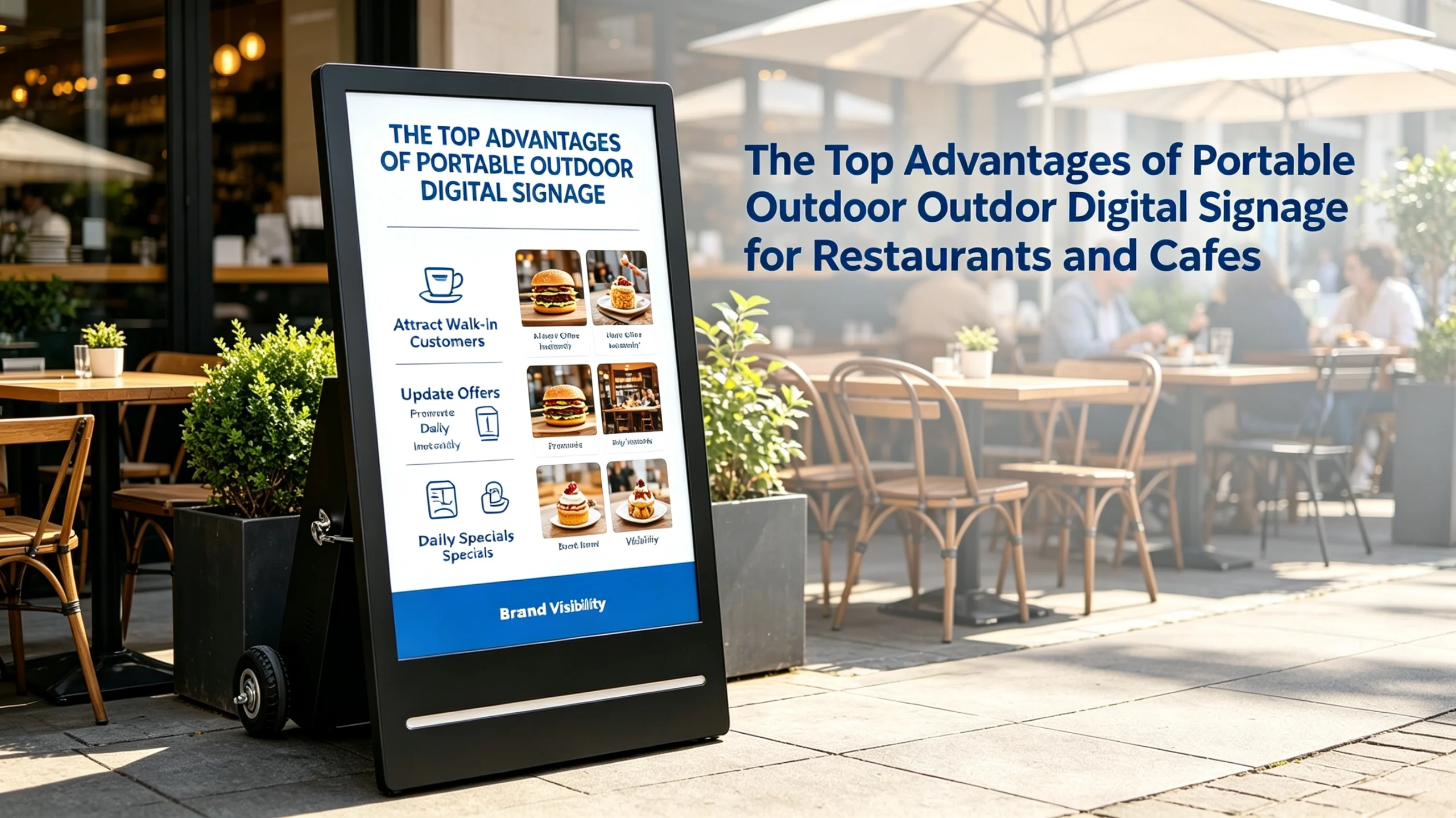
In the highly competitive hospitality industry, restaurants and cafes are constantly seeking innovative ways to capture attention and entice customers. While traditional static menus and chalkboards have their charm, they often lack the dynamic appeal needed to stand out in a crowded market. Enter portable outdoor digital signage—a game-changing solution that is revolutionizing how food and beverage establishments communicate with their clientele. By leveraging high-brightness screens and flexible mobility, these displays offer a myriad of benefits ranging from enhanced visual marketing to operational flexibility. For business owners looking to upgrade their storefronts, exploring professional digital signage solutions is the first step toward modernizing their customer engagement strategy.
1. Unmatched Visual Impact and Attractiveness
The primary advantage of portable outdoor digital signage is its ability to grab attention instantly. Unlike static posters that can become faded or ignored, digital screens utilize vibrant colors, motion graphics, and high-definition video to tell a story. For a cafe, this could mean displaying a rotating carousel of steaming lattes and flaky croissants. For a restaurant, it could be a slow-motion video of a sizzling steak or a fresh salad being tossed.
Human eyes are naturally drawn to movement and light. A bright, moving digital display acts as a beacon for passersby, significantly increasing the likelihood of foot traffic. This visual appeal is crucial during both day and night; with high-brightness panels (often reaching 2500 nits or higher), the content remains visible even under direct sunlight, ensuring your marketing messages are never washed out.
2. Real-Time Menu Updates and Dynamic Pricing
One of the most significant operational headaches for restaurant owners is the cost and effort associated with changing prices or menu items. Printing new menus every time the price of ingredients fluctuates is expensive and wasteful. Portable digital signage solves this problem effortlessly.
With a centralized management system, owners can update prices, mark items as “sold out,” or add daily specials with just a few clicks on a tablet or computer. This agility allows restaurants to implement dynamic pricing strategies—such as happy hour discounts or lunch specials—that can be scheduled to appear and disappear automatically at specific times. This flexibility ensures that the information displayed to customers is always accurate and up-to-date, reducing customer frustration and streamlining the ordering process.
3. Enhanced Mobility and Flexibility
The term “portable” is key here. Unlike traditional fixed billboards or wall-mounted TVs, portable digital signage comes with wheels or lightweight stands, allowing businesses to move them wherever they are needed most.
- Morning Setup: A cafe can place a unit on the sidewalk to catch the morning commuter rush, promoting breakfast deals.
- Lunch Hour: A restaurant can move the sign closer to the street to attract office workers looking for a quick bite.
- Evening Ambiance: In the evening, the sign can be moved to the patio to act as a mood setter or to display the dinner menu.
This mobility also allows businesses to adapt to weather conditions. If it starts raining, the sign can be quickly moved under an awning or brought inside, ensuring it remains functional and protected.
4. Weather Resistance and Durability
Outdoor environments are tough on electronics. Rain, dust, extreme heat, and cold can destroy standard indoor screens. However, portable outdoor digital signage is specifically engineered to withstand the elements. They typically feature IP54 or higher-rated enclosures, which means they are dust-proof and water-resistant.
This durability ensures that your investment is protected. You don’t have to worry about bringing the unit in every night or panicking when a sudden storm hits. This reliability means your marketing efforts continue uninterrupted, providing a consistent return on investment. When selecting equipment, it is vital to choose hardware designed specifically for outdoor use, similar to the ruggedized options found in professional digital signage series to ensure longevity.
5. Cost-Effective Marketing and Advertising
While the initial investment in a digital sign may be higher than a simple chalkboard, the long-term savings are substantial. There are no recurring costs for printing, laminating, or delivering physical signage. Once the hardware is purchased, the cost of changing content is virtually zero.
Furthermore, digital signage offers opportunities for additional revenue. Restaurants can sell advertising space on their screens to third-party brands (e.g., a local beverage distributor or a movie theater). This can turn a marketing expense into a profit center, offsetting the initial cost of the equipment. For businesses looking to source these displays cost-effectively, partnering with a reputable manufacturer through a dedicated digital signage service can provide access to OEM options and competitive pricing.
6. Improved Customer Experience and Engagement
Digital signage can do more than just display prices; it can enhance the dining experience. By integrating QR codes onto the screen, customers can scan to view nutritional information, allergens, or even place an order directly from their phones. This reduces wait times and improves service efficiency.
Additionally, digital menus can be designed with accessibility in mind, using larger fonts and high-contrast colors for visually impaired customers. The engaging nature of video content also helps to build brand personality, making the establishment feel modern and tech-savvy.
7. Social Media Integration and Interactivity
Modern digital signage often comes with interactive capabilities or social media integration. Restaurants can display a live feed of their Instagram photos, encouraging customers to tag the establishment in their posts. This user-generated content acts as powerful social proof, attracting new customers who see others enjoying their meals.
Some advanced systems even allow for touch-screen interaction, letting customers browse the full menu, play games while waiting, or provide feedback on their experience. This two-way interaction creates a deeper connection between the brand and the consumer.
Conclusion
For restaurants and cafes looking to thrive in a digital-first world, portable outdoor digital signage is no longer a luxury—it is a necessity. From capturing the attention of passersby with stunning visuals to streamlining menu management and withstanding the elements, these devices offer a versatile solution for modern marketing challenges.
By investing in high-quality, portable displays, business owners can ensure their messaging is clear, dynamic, and compelling. Whether you are running a small coffee shop or a busy bistro, the ability to adapt your marketing in real-time and meet your customers where they are is invaluable. It is time to move beyond static prints and embrace the bright, mobile future of outdoor advertising.